Between carpool runs, after-school activities, and hectic weekday schedules, finding nutritious snacks that kids will actually eat can feel like solving a puzzle with half the pieces missing. The good news: dozens of portable, wholesome options exist that combine real nutritional value with kid appeal, and most take less than five minutes to pack.
The challenge isn’t just about nutrition. Your snacks need to survive a backpack, remain appealing at room temperature, and compete with the lure of chips and cookies that other kids bring. Research consistently shows that children who eat balanced snacks perform better academically and stay energized all day making your effort well worth it.
This guide delivers 15 practical snack options that meet real-world demands. Each choice includes specific nutritional benefits, packing tips to maintain freshness, and variations to accommodate different taste preferences and dietary needs. Whether you’re preparing snacks for a single child or organizing for an entire classroom, these solutions work within tight morning schedules without requiring special kitchen skills or expensive specialty ingredients. You’ll also find strategies for batch preparation on weekends and answers to common concerns about allergies, picky eaters, and food safety during transport.
How We Selected These Portable Snack Options
Choosing the right snacks for school days means balancing nutrition with practicality. We didn’t just pick any portable foods, each option on this list met specific standards that matter for busy families and active kids.
Our selection criteria focused on five essential factors:
- Nutritional balance: Each snack provides at least one of the key nutrients kids need, protein for sustained energy, fiber for fullness and digestive health, or healthy fats for brain function
- Minimal processing: We prioritized whole foods or minimally processed options without artificial additives, excessive sugar, or unhealthy fats
- True portability: Snacks must travel well in backpacks and lunch boxes without making a mess or requiring refrigeration for several hours
- Kid-friendly appeal: The best nutrition doesn’t matter if kids won’t eat it, so we focused on flavors and textures that actually appeal to school-aged children
- Simple preparation: Busy mornings demand quick assembly, so these options require minimal prep time or can be made ahead in batches
We also considered allergen awareness, recognizing that many schools have nut-free policies. You’ll find several alternatives that work within those constraints while still delivering solid nutrition.
These aren’t perfect foods, no single snack contains everything a growing child needs. But each option contributes meaningfully to daily nutrition without the empty calories, artificial ingredients, or sugar crashes that come with typical grab-and-go snacks. They’re practical choices that support both your schedule and your child’s health.
1. String Cheese with Whole-Grain Crackers
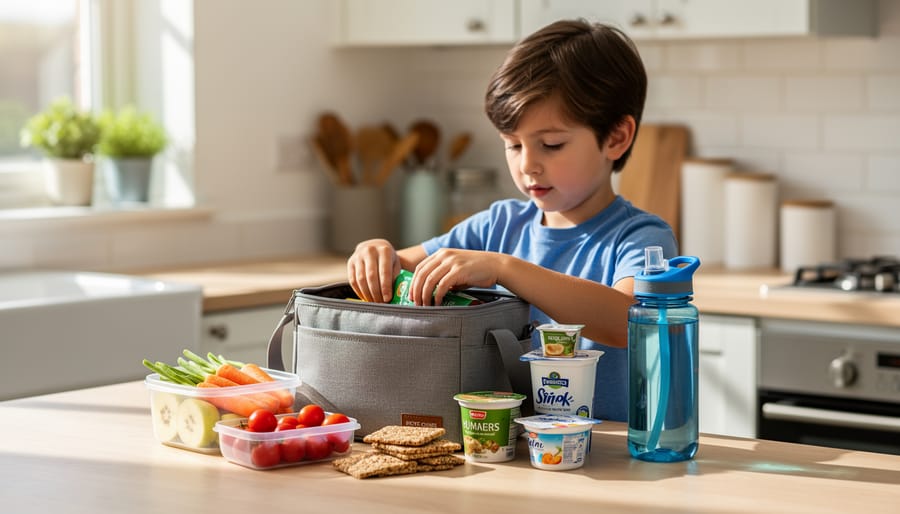
String cheese paired with whole-grain crackers delivers a balanced combination of protein, calcium, and complex carbohydrates that keeps kids satisfied between meals. The protein in cheese helps build and repair muscles while supporting steady energy levels, and the calcium contributes to strong bones and teeth during critical growth years. Whole-grain crackers add fiber and B vitamins that white-flour versions lack.
This snack travels exceptionally well. Individually wrapped string cheese stays fresh for several hours at room temperature, though an ice pack in the lunch box helps maintain quality. Choose whole-grain crackers with at least 2 grams of fiber per serving and minimal added sugars. Pre-portion crackers into small bags or containers to prevent overeating and keep them crisp. Most kids enjoy the interactive element of peeling string cheese, making this option both nutritious and entertaining.
2. Fresh Apple Slices with Nut Butter Packets
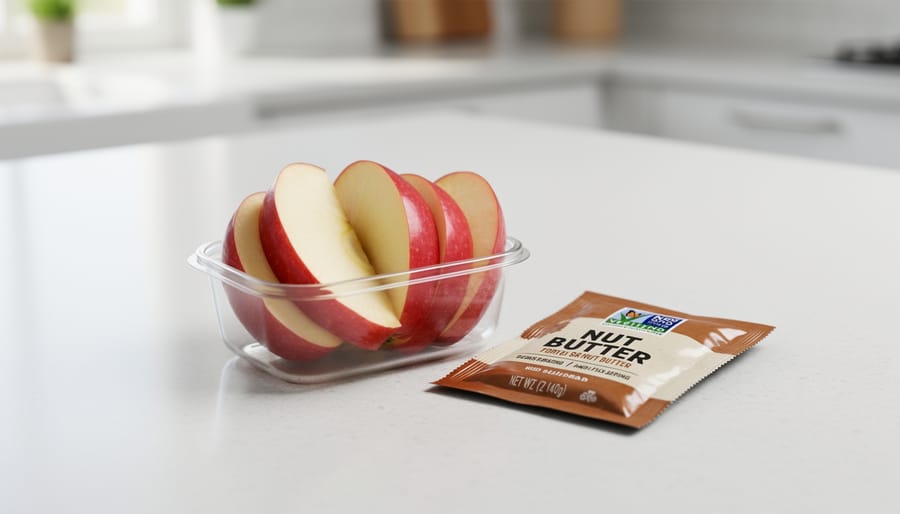
Fresh apple slices paired with single-serve nut butter packets deliver a winning combination of soluble fiber, protein, and healthy fats that keeps kids satisfied between meals. The fiber in apples slows digestion while nut butter provides sustained energy, together they prevent the blood sugar spike-and-crash cycle that comes from fruit alone.
To prevent browning, toss sliced apples in a bit of lemon juice or submerge them briefly in cold water with a pinch of salt. Pat dry before packing. Individual nut butter packets (almond, peanut, or cashew) offer built-in portion control and eliminate messy jars. Look for versions with just nuts and maybe salt, skip those with added sugars or oils. One medium apple with a single packet makes an ideal serving size for most school-aged children.
3. Trail Mix with Nuts, Seeds, and Dried Fruit
Trail mix packs serious energy into a small, portable container, perfect for kids who need sustained fuel between classes or after sports. The combination of nuts, seeds, and dried fruit delivers healthy fats, protein, and natural sugars that release energy gradually rather than spiking blood sugar like candy would.
The challenge is finding or making versions that aren’t loaded with chocolate chips, yogurt-covered raisins, and sweetened cranberries. Read ingredient labels carefully. Choose mixes where nuts and seeds make up the bulk of the content, with dried fruit as an accent rather than the main ingredient. Unsweetened dried fruit (like raisins, apricots, or apple chips) provides plenty of natural sweetness without added sugar.
Making your own trail mix gives you complete control. Start with raw or dry-roasted almonds, cashews, or peanuts. Add pumpkin seeds or sunflower seeds for extra nutrition. Toss in a small amount of unsweetened dried fruit for flavor. Store in reusable containers or small bags for grab-and-go convenience.
4. Hummus Cups with Veggie Sticks
Hummus delivers plant-based protein and fiber that keeps kids satisfied between meals. A quarter-cup serving provides around 4-6 grams of protein, plus iron and folate. The chickpea base offers complex carbohydrates for steady energy without the blood sugar spike of processed snacks.
Carrot sticks, cucumber slices, and bell pepper strips work best for dipping, they’re sturdy, colorful, and naturally sweet enough to appeal to younger palates. Snap peas and celery sticks add satisfying crunch. Cut vegetables the night before and store them in water to maintain freshness.
Individual hummus cups are widely available and stay fresh at room temperature for several hours, making them genuinely portable. Look for options with simple ingredients: chickpeas, tahini, olive oil, lemon juice, and garlic. Skip varieties loaded with added oils or sodium. Many brands now offer single-serve containers that fit perfectly in lunchboxes alongside a small baggie of vegetables.
5. Greek Yogurt Pouches or Tubes
Greek yogurt pouches pack roughly 8-10 grams of protein per serving, double what regular yogurt offers, making them excellent for sustained energy during school hours. The probiotics support digestive health, though you’ll want to check labels carefully. Look for options with less than 10 grams of added sugar and avoid artificial sweeteners, which many brands sneak into “low-sugar” versions.
Temperature matters more than parents realize. These pouches need to stay below 40°F to prevent spoilage, so pack them with an ice pack in an insulated lunch box. They’ll typically stay safe for about four hours. Some schools have refrigerators available, but don’t count on it. If your child’s lunch sits at room temperature longer than that window, skip the yogurt that day and choose a more shelf-stable option instead.
6. Hard-Boiled Eggs
Hard-boiled eggs pack all nine essential amino acids into a portable, pre-portioned snack that requires zero morning prep. A single large egg delivers about 6 grams of protein along with vitamin D, choline, and B vitamins that support brain function, particularly valuable during long school days.
Batch-cook a dozen eggs on Sunday evening and they’ll stay fresh in the refrigerator for up to a week. Keep them in their shells until you’re ready to pack them, which preserves moisture and prevents that rubbery texture. If your child’s school lacks refrigeration, use an insulated lunch bag with an ice pack; eggs can safely stay below 40°F for several hours this way.
Some kids prefer their eggs peeled and halved with a sprinkle of salt, while others like them whole to crack themselves at snack time.
7. Whole-Grain Granola Bars
Whole-grain granola bars offer a convenient energy boost during long school days, but not all bars are created equal. The best options list whole grains like oats or quinoa as the first ingredient and contain at least 3 grams of fiber and protein. Look for bars with recognizable ingredients, nuts, seeds, dried fruit, and honey, rather than long lists of additives and preservatives.
The difference between a healthy granola bar and a glorified candy bar often comes down to sugar content and processing. Brands that use dates or other whole fruits for sweetness tend to provide sustained energy without the blood sugar spike. Choose bars that feel substantial and have visible whole ingredients like oats and nuts rather than those that crumble into powder. For the most control over ingredients, consider making your own bars on weekends, they freeze well and you can customize them to your child’s preferences while keeping sugar in check.
8. Edamame Pods
Edamame pods deliver impressive nutrition in a kid-friendly package. These young soybeans pack about 8 grams of protein per half-cup serving, along with 4 grams of fiber. That combination keeps children satisfied longer than simple carbs alone.
You can buy edamame fresh or frozen at most grocery stores. To prep ahead, simply boil the pods for 3-5 minutes, drain, and sprinkle with a pinch of sea salt. They stay fresh in the refrigerator for up to four days, making them perfect for Monday meal prep.
Pack cooled edamame in a small container with a napkin to catch any moisture. Kids can eat them straight from the pod by squeezing the beans into their mouths. The interactive eating style often appeals to reluctant vegetable eaters.
9. Whole-Wheat Mini Muffins
Whole-wheat mini muffins pack whole grains, fiber, and the flexibility to sneak in fruits or vegetables that kids might otherwise reject. Carrot, zucchini, banana, and blueberry varieties work particularly well because the muffin texture masks vegetables while adding moisture and natural sweetness. Making a double batch on Sunday provides snacks for the entire week, just freeze extras in individual portions and grab them the morning you need them.
When buying premade options, check labels for whole-wheat or whole-grain flour listed first, minimal added sugar (under 8 grams per muffin), and recognizable ingredients. Mini sizes offer better portion control than full muffins and fit easily into lunchboxes. Store cooled muffins in airtight containers at room temperature for three days, refrigerated for a week, or frozen for up to three months.
10. Cheese Cubes with Cherry Tomatoes
Cheese cubes paired with cherry tomatoes create a nutritionally balanced snack that combines protein and calcium from the cheese with vitamin C and antioxidants from the tomatoes. This combination helps maintain steady energy levels while supporting bone health and immune function.
Cut cheese into bite-sized cubes, cheddar, mozzarella, or Colby work well, and pack alongside halved cherry tomatoes in a small container with a divider or in separate compartments of your lunch box for kids. Include a few toothpicks to make eating more fun and less messy. This snack stays fresh for several hours without refrigeration, though an ice pack extends freshness. The simple prep makes it easy to incorporate into your weekly meal planning tips routine, and the colorful presentation appeals to kids who want to eat healthy at school.
11. Roasted Chickpeas
Roasted chickpeas deliver that satisfying crunch kids love while packing 6 grams of protein and 5 grams of fiber per half-cup serving. They’re shelf-stable and travel well in small containers or snack bags.
Making them at home is simple: drain and dry canned chickpeas, toss with a touch of olive oil and your chosen seasonings, then roast at 400°F for 25-30 minutes until crispy. Cinnamon-sugar for sweet lovers or garlic powder for savory fans both work well. Store in an airtight container for up to a week.
When buying pre-made, check the ingredient list for minimal added oils and skip versions loaded with excess salt. Brands like Biena and Saffron Road offer kid-friendly flavors without the junk.
12. Banana with a Handful of Almonds
This pairing delivers both immediate and lasting energy, the banana provides quick-burning natural sugars plus potassium for muscle function, while the almonds supply protein, healthy fats, and fiber that slow digestion and keep kids satisfied longer. The combination prevents the blood sugar spike and crash that happens with carbs alone.
Pack a banana in any lunch box or backpack; add a small handful of almonds (about 10-12 nuts, roughly an ounce) in a separate bag or container. The banana’s peel protects it naturally, and almonds don’t require refrigeration. Choose raw or lightly roasted almonds without added salt or flavorings for the healthiest option.
13. Rice Cakes with Avocado
Rice cakes provide a light, crunchy base that pairs perfectly with creamy avocado, creating a snack that delivers healthy monounsaturated fats alongside whole grains. This combination keeps kids satisfied longer than simple carbohydrates alone while supporting brain function and steady energy levels.
The beauty of this option is its speed. Mash half an avocado with a fork, spread it on two or three rice cakes, and you’re done in under two minutes. Add a sprinkle of salt or everything bagel seasoning for extra appeal to older kids.
For morning prep, slice avocados the night before and squeeze lemon juice over them, then store in an airtight container. This prevents browning for several hours. Pack the rice cakes separately and let your child assemble at snack time to maintain the crunch.
14. Smoothie in a Thermos
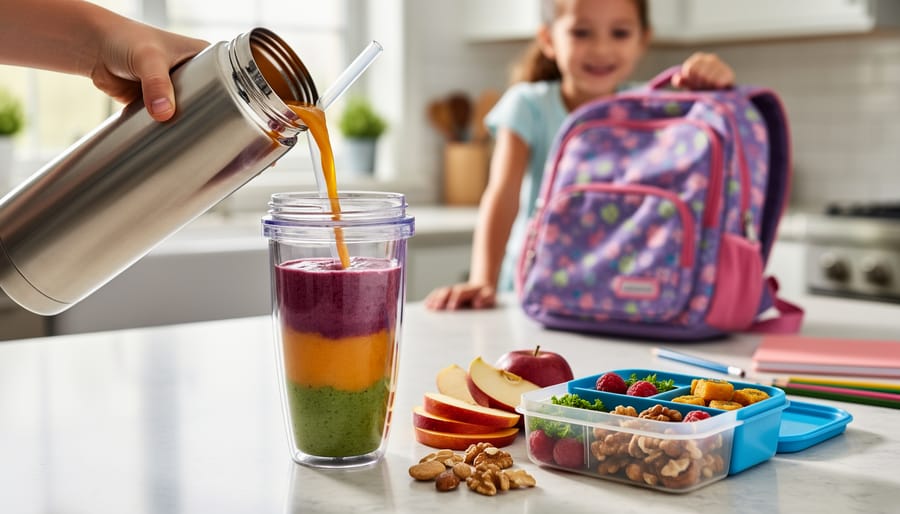
A smoothie in a vacuum-sealed thermos transforms breakfast leftovers or snack time into a nutrient-packed portable option. Blend fruits like berries or banana with leafy greens (spinach blends virtually undetectable), plus protein from Greek yogurt, nut butter, or protein powder. The key advantage: you can pack servings of produce that kids might otherwise refuse in whole form.
Pre-chill your thermos with ice water for five minutes before adding the smoothie, this step keeps contents cold for up to six hours. Freeze half the fruit you’ll use instead of adding ice, which dilutes flavor and nutrition as it melts. Blend until completely smooth to prevent separation, and fill the thermos to the brim to minimize air exposure. For best results, prepare the night before and store in the refrigerator, then transfer to the thermos that morning.
15. Whole-Grain Pretzels with Sunflower Seed Butter
Whole-grain pretzels paired with sunflower seed butter create a satisfying snack that works well for schools with strict nut-free policies. The pretzels provide complex carbohydrates and a crunchy texture kids enjoy, while sunflower seed butter delivers protein and healthy fats similar to traditional nut butters.
Look for pretzels made with whole wheat flour as the first ingredient, avoiding those with excessive sodium. A serving of 15-20 small pretzels paired with one to two tablespoons of sunflower seed butter makes an appropriate portion for school-aged children. Pack the butter in a small container for dipping, or choose individual packets for convenience.
This combination stays stable at room temperature for several hours, making it genuinely practical for lunch boxes and field trips.
Making On-the-Go Snacks Work for Your Family
The difference between good intentions and actual healthy snacking often comes down to systems. Dedicate one hour each weekend to washing, chopping, and portioning fruits and vegetables. Store cut produce in airtight containers lined with paper towels to absorb excess moisture, which extends freshness by several days. Pre-portion snacks into individual containers or reusable bags so you can grab and go on busy mornings without making decisions under pressure.
Temperature management matters more than parents realize. Insulated lunch bags with ice packs keep perishable items like yogurt, cheese, and hummus safe for up to five hours. For items that truly need cold storage all day, freeze water bottles overnight and pack them alongside snacks, they’ll keep everything chilled and provide cold water by lunch.
Getting kids involved transforms snacking from a battleground into a collaboration. Let school-aged children choose two or three options from your approved list each week, and assign age-appropriate prep tasks. Even five-year-olds can wash grapes or count out crackers, while older children can assemble their own snack boxes. This investment in autonomy pays off in fewer rejected snacks and more adventurous eating.
For allergies and dietary restrictions, build a master list of safe options specific to your child’s needs and keep it visible on your refrigerator. Stock shelf-stable alternatives like sunflower seed butter instead of peanut butter, or coconut yogurt instead of dairy. Research shows school-aged children benefit from one to two planned snacks daily, with portions roughly the size of their cupped hand for solid foods or half a cup for liquids. This framework prevents both under-fueling and constant grazing that interferes with appetite at mealtimes.
Keep backup snacks you don’t need to think about, granola bars, dried fruit, or nut butter packets, in your car, desk drawer, or bag for days when prep doesn’t happen.
Common Questions About Healthy Portable Snacks
How long can snacks stay fresh without refrigeration?
Most whole-grain crackers, nuts, dried fruit, and granola bars remain safe at room temperature for several hours. Cheese sticks and yogurt tubes can typically stay unrefrigerated for about four hours, though an ice pack extends their freshness through lunchtime. Hard-boiled eggs should stay cool and are best eaten within two hours at room temperature.
What if my child has food allergies?
Many healthy portable snacks naturally avoid common allergens, try sunflower seed butter instead of peanut butter, or offer fruit with seeds rather than nuts. Always read labels carefully for hidden allergens in packaged items, and communicate clearly with teachers about your child’s restrictions. The options in this list include several allergy-friendly choices like rice cakes, hummus with veggies, and fruit-based snacks.
How much should kids snack between meals?
School-aged children typically need one or two snacks daily, depending on their activity level and meal timing. A balanced snack of 100-200 calories, combining protein, fiber, or healthy fats, helps maintain steady energy without spoiling appetite for meals. Watch your child’s hunger cues rather than following rigid snack schedules.
Are packaged snacks ever okay?
Yes, packaged snacks save time and work well when you choose options with short ingredient lists and minimal added sugar. Look for items where whole grains appear first and added sugars stay under 6-8 grams per serving. Convenience matters for busy families, and a packaged granola bar or yogurt pouch beats skipping snacks altogether.
Getting picky eaters to accept healthier snacks takes patience but doesn’t require battles. Start by offering new foods alongside familiar favorites, pair apple slices with their preferred crackers, for instance. Let kids help choose snacks at the store or pack their own containers, which increases their investment in eating what they’ve selected. Keep portions small when introducing something new, and remember that it often takes multiple exposures before children accept unfamiliar foods. If your child refuses vegetables with hummus but loves cheese and crackers, that’s still a win. Build on what works rather than forcing options that create stress for everyone involved.
Healthy snacking for school-aged children doesn’t require perfection or elaborate preparation. Start with two or three options from this list that match your child’s preferences and your family’s routine. As these become habits, you can gradually introduce new choices and expand your repertoire.
The snacks you pack today do more than fill hungry stomachs between meals. They provide steady energy that helps kids stay focused during afternoon classes, fuel their bodies for sports and activities, and establish positive eating patterns that can last a lifetime. When children learn that nutritious food can also be convenient and delicious, they develop healthier relationships with eating.
Remember that some days will be easier than others. Keep a few no-prep options like string cheese or whole-grain granola bars on hand for rushed mornings. Involve your children in choosing and preparing snacks when time allows. Small, consistent steps toward healthier choices make a meaningful difference in your child’s daily wellness, even when life gets hectic.