The best healthy snack recipes are the ones kids will actually eat: simple, colorful, and ready in 15 minutes or less. The eight below fit that description, and most can be made ahead, packed in a lunchbox, or assembled by small hands in a classroom.
Each one pairs fruit or vegetables with protein, fiber, or healthy fats, a combination that helps kids stay full and focused between meals. That’s the same idea behind the energized all day approach to snacking: steady fuel beats a quick sugar spike followed by a crash.
We chose recipes using four simple filters. They use everyday ingredients you can find at a regular grocery store. They take little prep and need no special equipment. They’re flexible enough to swap out for allergies or picky preferences, with nut-free options flagged where it matters. And they taste good enough that no one feels like they’re eating “diet food.”
You’ll find apple nachos, veggie hummus cups, banana oat bites, yogurt parfaits, baked sweet potato fries, mini pizza bagels, homemade trail mix, and frozen berry bark. Every recipe includes practical tips on prep, storage, and getting kids involved. No food is off the table here. These are just easy, satisfying ideas to add to your rotation.
How We Chose These Healthy Snack Recipes
Not every snack idea earns a spot on a busy parent’s or teacher’s list, so we set a few simple rules before choosing these eight recipes. This is a curated list built on practical criteria and nutrition basics, not a round of hands-on kitchen testing. Each recipe had to meet the following standards:
- Quick prep: 15 minutes or less of active work.
- Whole-food ingredients: short, familiar lists built around fruit, vegetables, whole grains, and protein.
- Balanced nutrition: a mix of fiber, protein, and healthy fats.
- Kid appeal: colors, textures, and flavors children tend to enjoy.
- Lunchbox-friendly: easy to pack, carry, and serve in a classroom.
The balance piece matters most. Carbohydrates give kids quick energy, but pairing them with protein or fiber helps that energy last. Think apple slices with seed butter, or veggie sticks with hummus. That combination can help children stay full and focused between meals instead of hitting a slump an hour later.
We also kept school realities in mind. Several recipes, like the Banana Oat Bites and Homemade Trail Mix, can be made ahead and portioned for the week. Others, including the Apple Nachos and Trail Mix, include nut-free swaps so they fit common classroom policies and allergy needs.
Nothing here is labeled “good” or “bad.” Every food can have a place, and these recipes simply make it easier to offer a little more variety, color, and nutrition at snack time.
8 Healthy Snack Recipes for Busy Parents and Teachers
1. Apple Nachos with Nut Butter and Seeds, a Fruit-First Favorite
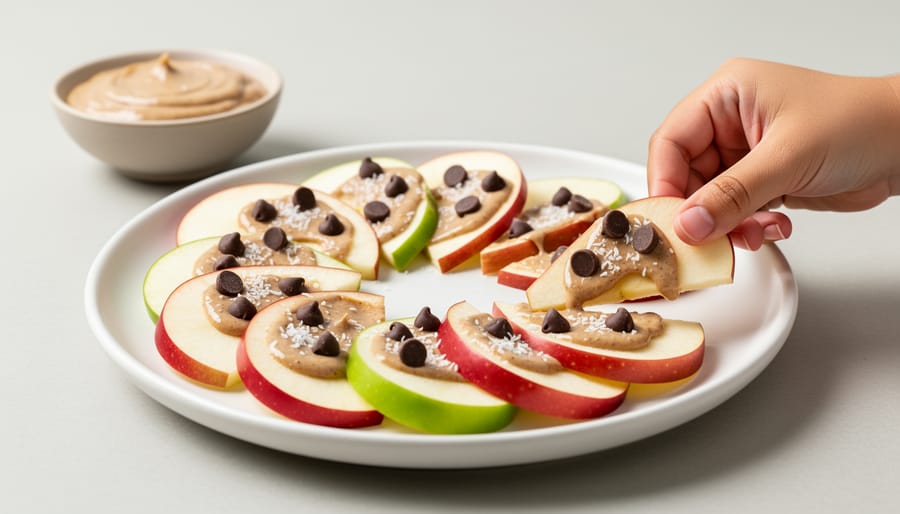
Apple nachos are a good first recipe because they feel like a treat but are built on fruit, with a little protein and healthy fat from nut or seed butter to keep kids full. Prep takes about 5 minutes.
What you need:
– 2 medium apples, any crisp variety
– 2 tablespoons nut butter or sunflower seed butter, warmed slightly
– 1 tablespoon seeds (pumpkin, sunflower, or hemp)
– 1 tablespoon unsweetened shredded coconut
– A small handful of mini chocolate chips (optional)
– A squeeze of lemon juice
How to make it:
1. Core the apples and slice them thinly, about a quarter inch thick.
2. Toss the slices with a little lemon juice, then fan them out on a plate or tray.
3. Warm the nut butter for 10 to 15 seconds in the microwave so it drizzles easily, then spoon it over the apples.
4. Sprinkle on the seeds, coconut, and chocolate chips, if using.
Practical tips: The lemon juice slows browning, which helps if you’re prepping ahead for a classroom or lunchbox. For a nut-free version, swap in sunflower seed butter and use seeds only, which suits most school policies. If you’re packing this for school, keep the toppings in a small separate container and let kids add them just before eating. It also works well with other on-the-go snacks when mornings get hectic.
2. Veggie Hummus Cups, Grab-and-Go Crunch
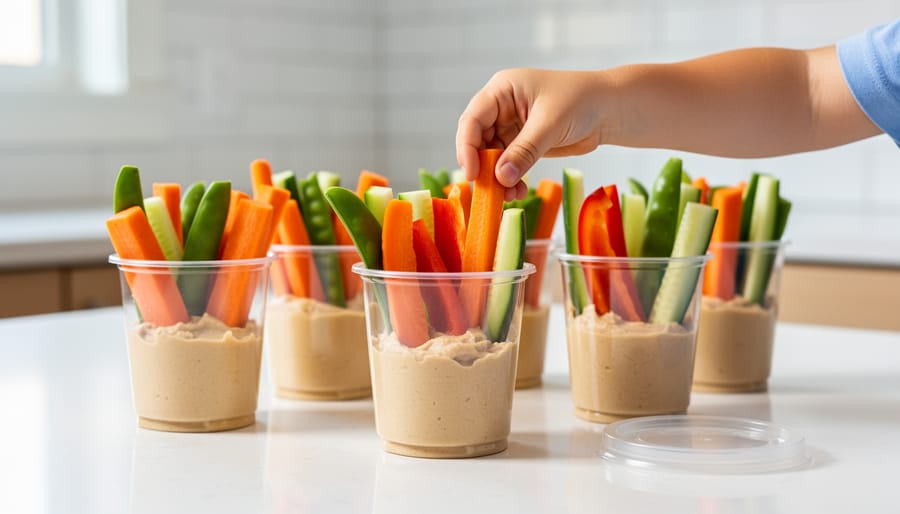
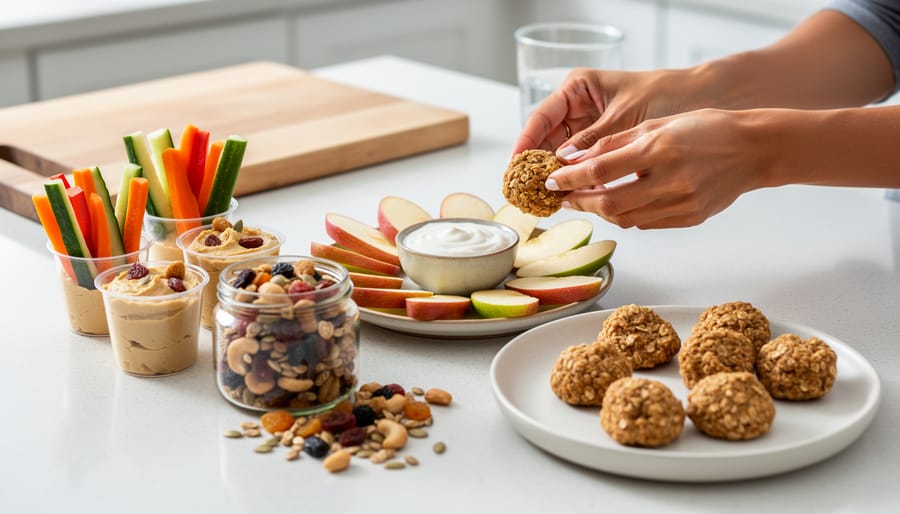
Spoon two to three tablespoons of hummus into the bottom of a small cup or jar, then stand carrot sticks, cucumber spears, and bell pepper strips upright in it. That’s the whole recipe, and it takes about ten minutes. Ingredients: store-bought or homemade hummus, two carrots, one cucumber, and one bell pepper, which makes four to six cups.
The combination works because chickpeas bring plant protein and fiber, while the raw veggies add crunch and more fiber. Together they digest slowly, which helps kids feel full through the afternoon instead of crashing an hour after eating.
To prep for the week, cut the veggies on Sunday and store them in an airtight container lined with a paper towel to absorb moisture. Spoon the hummus into cups, then top with the veggies and cover. Assembled cups keep well in the fridge for three to four days, so you can grab one each morning. Carrots and bell peppers hold their snap longest, while cucumber is best added the day of if you can.
Practical tip: set out the hummus and a few veggie options and let kids build their own cups. Children are more likely to eat what they’ve assembled themselves, and it’s an easy hands-on job for a classroom or kitchen. If your school is nut-free, hummus is usually a safe swap, but check the label for sesame or tahini allergies.
3. Banana Oat Bites, a Make-Ahead Energy Snack
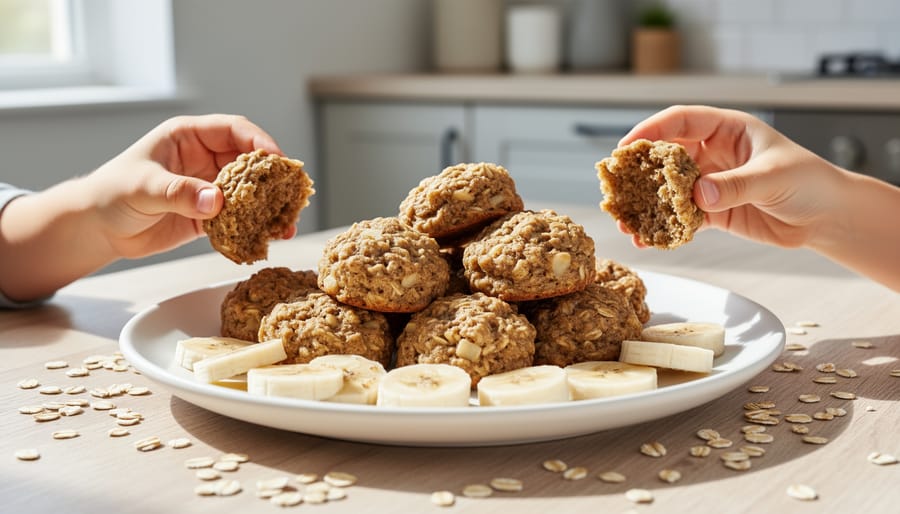
These soft little bites are one of the easiest make-ahead snacks you can bake. The ripe bananas bring all the sweetness, so there’s no added sugar to measure out.
Ingredients: 2 ripe bananas, 1 cup rolled oats, 1/2 teaspoon cinnamon, and a pinch of salt.
Steps:
1. Heat the oven to 350°F and line a baking sheet with parchment.
2. Mash the bananas in a bowl until mostly smooth.
3. Stir in the oats, cinnamon, and salt until combined.
4. Scoop tablespoon-sized mounds onto the sheet and flatten them slightly.
5. Bake for 12 to 15 minutes, until set and lightly golden.
Prep time: About 10 minutes of hands-on work, plus baking.
The riper the banana, the sweeter and softer the bites, so those spotty ones on the counter are perfect here. Oats add fiber that helps kids feel full through the afternoon, which makes this a good pick for after school or between classes.
For storage, keep cooled bites in an airtight container in the fridge for up to four days. To freeze, spread them on a tray for an hour, then move them to a freezer bag, where they keep for about two months. Pull one out in the morning and it will thaw by snack time.
Want some variety? Fold in raisins, chopped dried apricots, or a spoonful of seeds before baking. Letting kids pick their own add-in makes them far more likely to eat the finished bites.
4. Greek Yogurt Fruit Parfaits, Protein Plus Fruit
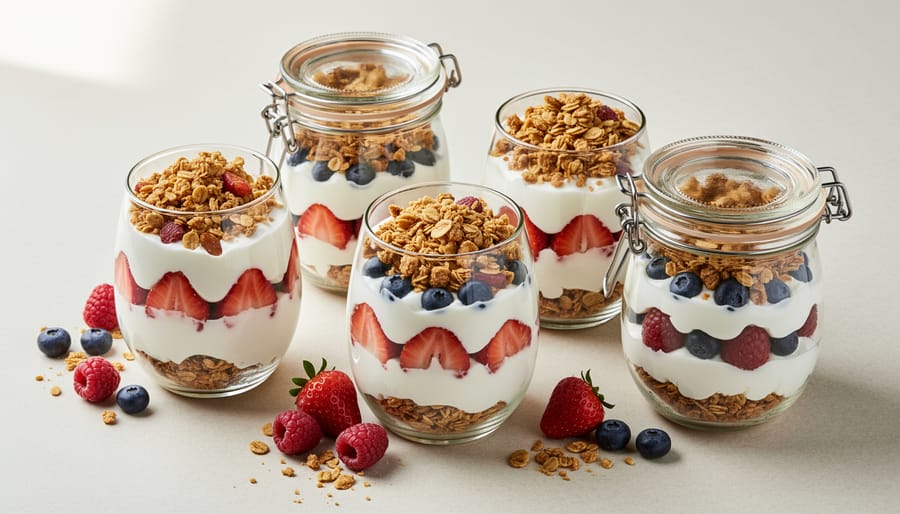
Layer plain Greek yogurt, fresh or thawed berries, and a small sprinkle of whole-grain cereal or granola in a cup or jar. That’s the whole recipe, and it takes about five minutes.
Ingredients: 3/4 cup plain Greek yogurt, 1/2 cup berries (strawberries, blueberries, or raspberries), 2 tablespoons whole-grain cereal or low-sugar granola.
Steps:
1. Spoon half the yogurt into a cup or small jar.
2. Add half the berries, then a little cereal.
3. Repeat the layers and finish with a few berries on top.
Flavored yogurts can carry a lot of added sugar, so starting with plain Greek yogurt puts you in charge of the sweetness. Ripe berries do most of the work, and if your kids want something sweeter, mash a few berries into the yogurt or stir in a small drizzle of honey for children over age one. Greek yogurt brings protein to the fruit, which helps kids feel satisfied until the next meal.
Prep time: About 5 minutes.
Tip: For packing, keep the cereal in a separate small bag or container and add it right before eating. Kept apart, it stays crunchy instead of turning soggy. A lidded jar with an ice pack keeps everything cool until snack time.
5. Baked Sweet Potato Fries, a Naturally Sweet Veggie Snack
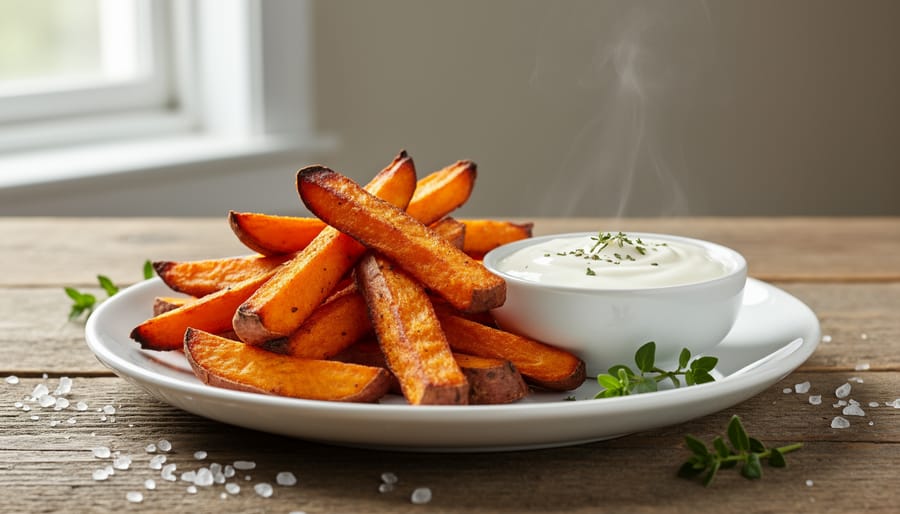
Sweet potatoes bring natural sweetness, fiber, and vitamin A, so these fries feel like a treat without much effort. Here’s the simple version.
Ingredients: 2 medium sweet potatoes, 1 tablespoon olive oil, a pinch of salt, and optional cinnamon or paprika.
Steps:
1. Heat the oven to 425°F and line a baking sheet with parchment.
2. Scrub the potatoes (no need to peel) and cut them into wedges about half an inch thick.
3. Toss the wedges with the oil and seasonings, then spread them in a single layer so they crisp instead of steam.
4. Bake for 25 to 30 minutes, flipping halfway, until the edges are golden.
Active prep is about 10 minutes, and the oven does the rest.
For a dip, stir a spoonful of plain Greek yogurt with a squeeze of lemon and a pinch of garlic powder. Kids who like ranch often take to this one, and it adds a little protein to the snack.
Practical tip: Bake a big batch on Sunday. Store the cooled fries in the fridge for up to four days, then reheat them on a baking sheet at 400°F for about 8 minutes. The oven brings back the crisp, while a microwave tends to make them soft. On school-day mornings, pop a tray in while everyone gets ready and pack the fries warm or at room temperature.
6. Mini Whole-Wheat Pizza Bagels, a Kid-Built Crowd Pleaser
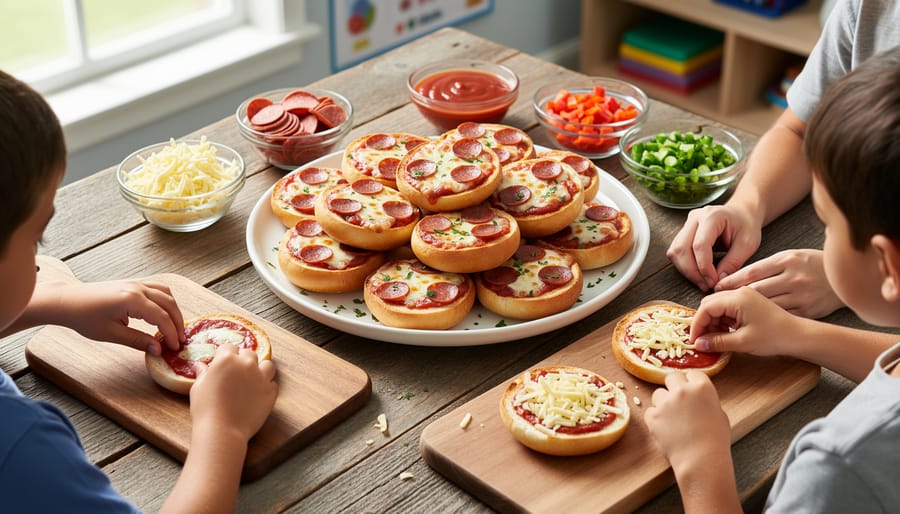
Pizza night doesn’t have to mean takeout. Whole-wheat mini bagels (or English muffins) turn into a snack kids genuinely want to build themselves, which is exactly why this one works so well after school or in a classroom. It also fits neatly alongside other easy eating activities that get kids curious about what goes on their plate.
What you need: whole-wheat mini bagels or English muffins, tomato sauce (no-sugar-added if you can find it), shredded mozzarella, and chopped toppings like bell pepper, spinach, mushrooms, or diced tomato.
How to make them:
1. Split the bagels or muffins and set them cut side up on a lined toaster-oven tray.
2. Spoon a small amount of sauce on each half and spread it to the edges.
3. Sprinkle on cheese, then let kids add their own veggies.
4. Toast at 375°F for about 6 to 8 minutes, until the cheese melts and the edges turn golden.
Prep time: about 10 minutes of active work.
Practical tip: Set up a topping bar with small bowls and let each child design their own. Kids who build the snack tend to be more willing to eat the veggies on it. For a classroom, do the assembly together and bake in batches, or send home unbaked kits for families to finish.
7. Homemade Trail Mix, Customizable and Nut-Free Friendly
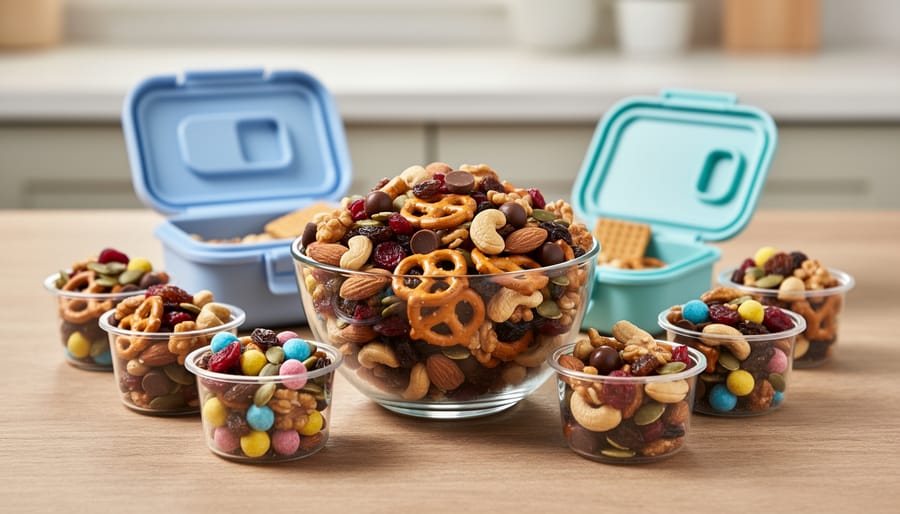
Trail mix is the ultimate choose-your-own-adventure snack, and it’s easy to keep nut-free. Start with about 1 cup of whole-grain cereal squares or O’s, 1 cup of air-popped popcorn, 1/2 cup of pumpkin seeds, and 1/2 cup of chopped dried fruit like raisins, cranberries, or apricots. Toss everything in a big bowl, and you’re done in about five minutes.
Because there are no nuts in this base mix, it fits most school allergy policies. Pumpkin and sunflower seeds give you crunch and a little protein, but double-check labels, since some seeds and cereals are processed in facilities that also handle nuts. If your school is strictly seed-free too, swap in extra cereal or whole-grain pretzels.
For portion control, scoop 1/3 to 1/2 cup into small snack bags or reusable containers so they’re ready to toss into a backpack or lunchbox. Kids tend to love this one, especially when they get to pick the mix-ins. Set out a few bowls of options, like mini marshmallows, banana chips, or a handful of chocolate chips, and let them build their own blend. Choosing for themselves makes them far more likely to actually eat it.
8. Frozen Yogurt Berry Bark, a Cool Treat That Feels Special
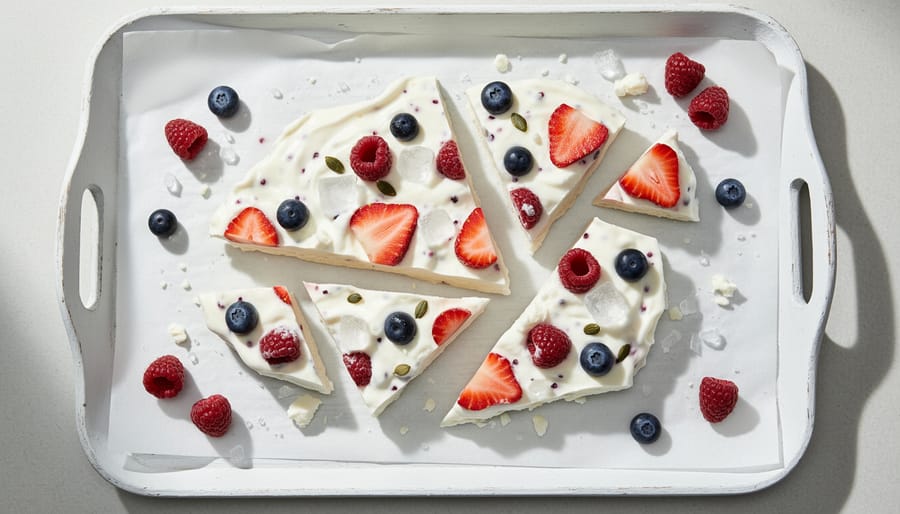
Frozen yogurt berry bark looks fancy but takes about ten minutes of hands-on work. Spread 1½ cups of plain Greek yogurt about ¼ inch thick on a parchment-lined baking sheet. If you want a touch of sweetness, stir in a teaspoon of honey first (skip it for children under one year old). Scatter on a handful of sliced strawberries, blueberries, or raspberries, then add a tablespoon or two of chopped nuts or pumpkin and sunflower seeds. Press the toppings in lightly so they stick.
Freeze the tray for at least two hours, until the yogurt is completely firm. Break the bark into rough pieces with your hands and serve right away. Kids tend to love the crack-and-snap part, so let them do the breaking.
Store leftover pieces in a freezer-safe container or zip-top bag, with parchment between layers so they don’t fuse together. They keep well for about two weeks. Because it’s cold, creamy, and a little sweet, this works nicely as a lighter dessert-style snack on a warm afternoon at home.
Common Questions About Healthy Snacks for School-Aged Kids
Parents and teachers tend to ask the same handful of questions about snacks, so here are practical answers you can use right away.
How many snacks do school-aged kids need?
Most kids do well with one or two snacks a day, usually mid-morning and after school, depending on how long they go between meals. Let their hunger cues guide you, and pair fruit or veggies with a little protein, like the Veggie Hummus Cups, so the snack actually keeps them full.
What if my child is a picky eater?
Offer a familiar food next to something new, and keep the pressure low. Customizable options like Homemade Trail Mix or Mini Whole-Wheat Pizza Bagels let kids choose their own mix-ins, which often makes them more willing to try new things.
How do I pack snacks safely for the school day?
Keep anything with yogurt or cheese cold with a small ice pack, and pack dry snacks like trail mix in sealed bags or containers. Make-ahead items such as Banana Oat Bites travel well and don’t need refrigeration for a short school day.
How can I handle nut allergies and school policies?
Check your school’s rules first, then swap in sunflower seed butter for nut butter and use pumpkin seeds in place of nuts. Homemade Trail Mix and Apple Nachos are both easy to adapt this way.
Getting kids involved in the kitchen can make a real difference, too. Children are often more excited to eat something they helped assemble, and jobs like layering a parfait, sprinkling toppings, or choosing a trail mix blend are simple and safe for most ages. A little hands-on time also builds confidence with food.
If you’re looking for more ideas to round out the school day, our guide to a healthy lunch box pairs nicely with these snacks. And for older kids who buy food at school, these tips to eat healthy at school can help them make confident choices on their own.
Keep Healthier Snacking Simple: Your Next Steps
Healthier snacking doesn’t need a big overhaul. It comes down to small choices you can repeat, week after week. Pick one or two recipes from the list that fit your schedule, like the Banana Oat Bites you can bake ahead or the Veggie Hummus Cups you can pack in minutes, and build from there.
Invite your kids into the kitchen, too. Whether they’re layering a parfait or choosing trail mix add-ins, a little ownership makes them far more likely to eat what they’ve made.