
Upskilling parents strengthens school communities by building the knowledge, confidence, and practical capabilities families need to support student learning, engage meaningfully with educators, and create healthier environments at home and school. When parents gain new skills through structured programs, whether in digital literacy, nutrition education, mental health awareness, or classroom support techniques, the benefits ripple across entire school communities. Research shows that schools implementing parent upskilling initiatives see measurable improvements in student attendance, academic performance, and overall family wellbeing.
The process starts with identifying specific skill gaps and community needs, then designing accessible learning opportunities that respect parents’ time constraints and diverse backgrounds. Successful programs share common elements: they’re relevant to real challenges families face, delivered in welcoming formats, and connected to visible outcomes for children.
This matters because parent capability directly influences student success. A parent who understands how to support homework effectively, recognizes signs of learning challenges, or knows how to communicate with teachers becomes a powerful partner in education. Schools benefit from more engaged families, reduced teacher burden, and stronger home-school connections. Parents gain confidence and community connections that extend beyond their children’s immediate academic needs.
The implementation framework requires careful planning but doesn’t demand extensive resources. With clear goals, strategic partnerships, and attention to accessibility, schools of any size can launch effective parent upskilling programs. The investment pays dividends through improved student outcomes, enhanced school culture, and families better equipped to navigate education challenges together. Parent coaching represents one proven approach within this broader movement toward family-centered school improvement.
What You’ll Need to Launch a Parent Upskilling Initiative

Starting a parent upskilling initiative requires less elaborate infrastructure than you might think, but getting the essentials in place from the outset sets you up for sustainable success.
First, secure buy-in from key stakeholders. You’ll need administrative support from school leadership, not just permission but active endorsement that signals to parents this matters. Involve teachers who can identify specific areas where parent capability directly supports student learning. Connect with your parent-teacher organization or school council; these groups often have established communication channels and can lend credibility to new initiatives.
On the practical side, gather these core resources:
- A reliable communication platform for scheduling and reminders, whether email lists, text messaging services, or school apps parents already use
- Flexible meeting spaces, from classrooms after hours to community centers or even virtual platforms for parents who can’t attend in person
- Basic presentation materials like projectors, whiteboards, or printable handouts tailored to different literacy levels
- Childcare arrangements or kids’ activity spaces so parents can focus during sessions
- A modest budget for refreshments, materials, and possibly stipends for expert facilitators
Don’t overlook partnerships with local health organizations, libraries, or community colleges. These groups often provide free facilitators, resources on nutrition or mental wellness, and ready-made curriculum frameworks you can adapt rather than building from scratch.
Establish a small organizing team, three to five committed parents and staff members, to share the workload. This prevents burnout and brings diverse perspectives to planning. Decide early on a simple feedback mechanism, even just a quick survey after each session, so you can course-correct as you learn what resonates.
The investment isn’t primarily financial. It’s time, relationship-building, and strategic coordination of what you already have. Most schools discover they possess more resources than they realized once they start mapping existing assets within their parent community.
Important Considerations Before You Begin
Before launching any parent upskilling program, recognize that well-intentioned initiatives can inadvertently create barriers or burnout if core challenges aren’t addressed from the start. The difference between a thriving program and one that fizzles out often comes down to how thoughtfully you plan for real-world constraints.
First, consider the diverse circumstances within your parent community. Working parents juggling multiple jobs, single-parent households, families with language barriers, and those with limited digital access all face unique obstacles. A program scheduled only during weekday mornings immediately excludes most working families, while English-only materials shut out non-English speakers. Survey your community early to understand transportation limitations, childcare needs, and preferred communication methods rather than assuming what works.
Resist the temptation toward one-size-fits-all programming. Parents have vastly different baseline knowledge, learning preferences, and goals. Some might need foundational health literacy while others want advanced nutrition planning skills. Offer varied entry points and formats, workshops, online modules, peer circles, printed guides, so families can engage in ways that fit their lives.
Confidentiality matters more than you might expect. Parents sharing struggles with their child’s mental health, family food insecurity, or feeling overwhelmed need assurance that conversations stay private. Establish clear ground rules about what stays within the group.
Finally, guard against initiative fatigue. Schools often launch programs with enthusiasm that outpaces sustainability. Start small with one or two focused offerings rather than an overwhelming menu that exhausts volunteers and confuses families. Build gradually as you learn what resonates and what your community can realistically maintain long-term.
Step-by-Step: Building Your Parent Empowerment Program

Assess Your Community’s Needs and Assets
Before designing any program, you need to understand what your parents actually want and what they’re already good at. Skip this step, and you risk building workshops nobody attends.
Start with a simple survey, digital or paper, asking parents what challenges they face supporting their children’s health and learning. Keep it short: five to seven questions maximum. Ask about confidence levels in areas like nutrition planning, managing screen time, supporting homework, or recognizing mental health concerns. Include an open question: “What would make you feel more equipped as a parent?”
Don’t just look for gaps. Identify strengths too. Which parents have nursing backgrounds, coaching experience, or language skills? Who runs successful home routines others might learn from? This asset mapping reveals natural workshop leaders and peer mentors already in your community.
Talk to teachers and school staff. They see patterns, which families struggle with attendance, lunch packing, or parent-teacher communication. Cross-reference their observations with survey data to prioritize where upskilling creates the biggest impact.
Analyse your results for common themes rather than trying to address every individual request. Three focused areas beat ten scattered topics.
Design Relevant Learning Opportunities
Design workshops around topics that directly connect to your school’s wellness priorities and solve real challenges parents face. Start with health literacy essentials, how to interpret nutrition labels, pack balanced school lunches, or advocate for healthy school lunches at school board meetings. Add sessions on recognizing early mental health warning signs in children and practical techniques parents can use at home to reduce student stress as research shows school support reduced parental distress and strengthened family coping strategies.
Technology workshops bridge the homework help gap, teach parents how to navigate online learning platforms, monitor screen time effectively, or understand digital safety basics their kids need. Keep sessions focused: one skill per 60-90 minute workshop works better than cramming multiple topics. Offer varied formats, live demonstrations, take-home resource guides, recorded videos for busy schedules, and always link content to specific school goals so parents see how their new knowledge improves their child’s daily experience.
Remove Barriers to Participation
The most effective parent programs fall short if families can’t actually attend. Start by offering sessions at multiple times, early morning drop-offs, lunch hours, and evening slots accommodate different work schedules. Weekend workshops reach parents who can’t take weekday time off.
Provide on-site childcare during every session. Parents won’t leave younger siblings at home, and supervision removes a major obstacle. Partner with high school students needing volunteer hours or rotating parent volunteers to keep costs manageable.
Language barriers exclude entire communities. Offer materials in your school’s primary languages and arrange interpreters for sessions. Better yet, run parallel sessions in different languages rather than relying solely on translation.
Consider transportation realities. Virtual options via video calls expand access for parents without reliable transport. Hybrid formats let families choose in-person or remote participation based on their situation that week.
Keep sessions short and focused, 45 minutes respects busy schedules better than two-hour commitments. Record sessions so parents can catch up asynchronously. Send materials home for those who simply can’t make scheduled times but want to engage independently.
Launch and Facilitate Programs
Once you’ve designed your programs and cleared barriers, the delivery phase becomes critical. Start your first workshop with a warm welcome that acknowledges parents’ busy lives, open with a quick win, like a simple strategy they can use that evening, to build immediate confidence and engagement.
Keep sessions interactive rather than lecture-based. Use small group discussions, role-playing scenarios, and hands-on practice so parents learn by doing, not just listening. A nutrition workshop might involve reading food labels together; a mental wellness session could practice stress-reduction techniques in real time.
Create peer learning circles of five to eight parents with similar interests or challenges. These smaller groups meet regularly between formal workshops, offering support and accountability. Provide simple discussion guides but let parents lead the conversation, ownership builds sustainability.
Establish a dedicated communication channel using whatever platform your parent community already prefers, whether that’s a WhatsApp group, email list, or school app. Share resources, celebrate wins, and maintain momentum between in-person gatherings. Regular touchpoints matter more than perfect platforms.
Build Parent-to-Parent Networks
The most powerful outcomes of parent upskilling often happen informally, in the conversations and connections that emerge after workshops end. When parents who’ve learned together continue supporting each other, they create lasting change that no single program can achieve alone.
Start by creating structured opportunities for parents to exchange contact information during workshops. Simple introductions where parents share their children’s grades and specific interests help identify natural affinity groups. Consider forming small accountability partnerships where two or three parents check in weekly about applying new skills, whether it’s trying recipes learned in nutrition sessions or practicing stress management techniques together.
Digital platforms like private Facebook groups or WhatsApp channels let parents share quick wins, troubleshoot challenges, and celebrate progress between formal meetings. Designate parent ambassadors who can welcome newcomers and keep conversations active. These peer-led spaces often address questions parents hesitate to ask educators directly.
Schedule informal coffee meetups or walking groups where relationships deepen beyond skill-building topics. When parents genuinely know each other, they’re more likely to coordinate carpools, share healthy meal ideas, or notice when a family needs extra support.
How to Know Your Initiative Is Working
Track both quantitative and qualitative indicators to understand your program’s true impact. Start with straightforward metrics: parent attendance patterns across sessions, repeat participation rates, and diversity representation. If you began with twenty parents and now regularly see fifty, with broader demographic reach, you’re creating genuine appeal. But numbers alone don’t tell the full story.
Gather direct parent feedback through brief surveys or informal conversations after sessions. Listen for specific changes: parents describing how they’ve implemented new strategies at home, requests for deeper topics, or spontaneous sharing of wins with other families. When parents start saying “I tried this and it worked” or “I never understood that before,” you’re building real capability.
Student-level indicators matter equally. Teachers often notice shifts before formal data emerges: more students bringing healthier lunches, improved homework completion, better attendance, or increased parent engagement at school events. Work with staff to track whether students whose parents participate show changes in behavior, wellness habits, or academic patterns. You might see parents better equipped to develop healthy habits in their children, reflected in choices around nutrition, sleep, and physical activity.
Community cohesion shows up in organic ways: parents exchanging contact information, forming carpool groups, or continuing conversations outside formal sessions. When parents begin supporting each other independently, you’ve created sustainable networks.
If participation plateaus or feedback suggests misalignment, adjust quickly. Survey non-participants about barriers, test different times or formats, or shift topics based on expressed needs. Scaling means expanding what works, adding session tracks, training parent facilitators, or partnering with other schools, while maintaining the personal connection that drives impact.
Real-World Impact: How Upskilled Parents Transform School Communities
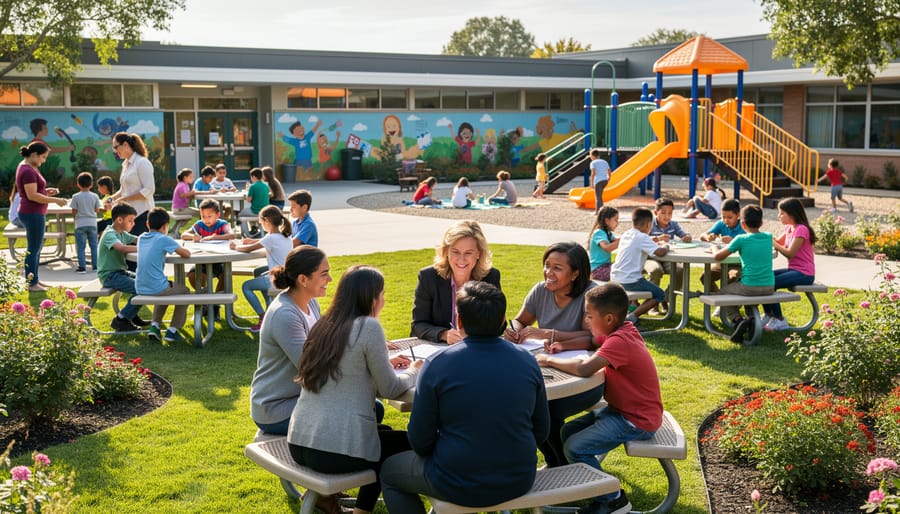
When parents gain skills in health literacy, nutrition, and wellness advocacy, the ripple effects extend far beyond individual families. Schools implementing structured parent upskilling initiatives consistently report measurable improvements across multiple dimensions of student and community wellbeing.
Student health outcomes show the most direct impact. Schools that equip parents with nutrition education see increased participation in healthy meal programs and reduced consumption of processed snacks brought from home. One California district documented a 34% increase in fruit and vegetable consumption after parents completed a six-week nutrition workshop series. Similarly, when parents learn mental wellness recognition and support strategies, teachers report earlier intervention for students experiencing anxiety or depression, leading to better long-term outcomes.
Academic engagement strengthens as well. Parents who understand how to support homework routines, create distraction-free study environments, and communicate effectively with teachers become powerful partners in learning. Research shows that students whose parents participate in skill-building programs demonstrate higher homework completion rates and improved classroom behavior, directly supporting empowering next generation learners to thrive.
The broader school climate transforms when upskilled parents form connected networks. Schools with active parent learning communities report reduced bullying incidents, stronger home-school communication, and increased volunteer participation in wellness initiatives. These parents advocate more effectively for health resources, from improved playground equipment to mental health counselors.
Community resilience grows as parents apply their new skills beyond the school gates, creating neighborhood support systems that sustain children’s health and safety year-round. The investment in parent capability becomes self-perpetuating as empowered families mentor newcomers and champion ongoing improvements.
Common Questions About Parent Upskilling Programs
Parents and educators often have similar questions when considering upskilling programs. Understanding these common concerns helps you plan initiatives that address real barriers and build confidence in participation.
How much time do parent upskilling programs require?
Most effective programs offer flexible options, from single 90-minute workshops to monthly sessions spread across a term. Many schools find that brief, focused sessions (60-90 minutes) with optional follow-up activities work best for busy families.
What topics should we cover first?
Start with needs identified in your community assessment, but popular foundational topics include supporting children’s mental health, understanding nutrition basics for packed lunches, and helping with homework without doing it for them. Let parent interest guide your priorities rather than assuming what families need.
How do we know if programs are actually making a difference?
Track both participation patterns and qualitative feedback through brief surveys after each session. Look for signs like increased parent volunteering, more families attending school events, parents asking informed questions at meetings, and teachers noticing improved student wellness habits at home.
What if interest drops off after the first few sessions?
This is normal and doesn’t mean failure. Refresh engagement by rotating topics, trying different formats like parent-led sharing circles, or scheduling programs around school events families already attend. A core group of regular participants often becomes your foundation for sustainable change.
Another frequent concern involves parents who feel intimidated or worry they lack the skills to participate meaningfully. Frame programs as learning together rather than expert-led instruction. When parents see other families navigating similar challenges, they realize everyone brings valuable experience to share. Position upskilling as community building, not remedial education.
Some schools worry about attendance from families facing the most barriers. This is precisely why removing obstacles matters so much. Offering childcare, providing translation, scheduling around work shifts, and creating welcoming environments specifically for those families makes the difference between symbolic efforts and genuine community transformation.
When you invest in upskilling parents, you’re not just offering workshops, you’re creating a ripple effect that touches every corner of your school community. Empowered parents bring new energy, perspectives, and capabilities that strengthen the foundation of student wellbeing and academic success.
The relationship works both ways. As parents gain confidence in supporting their children’s health, nutrition, and learning, they become more engaged community members. That engagement, in turn, creates a more responsive, connected school environment where every child has better opportunities to thrive.
You don’t need to launch a comprehensive program overnight. Start small: one parent coffee morning focused on mental wellness, a simple nutrition workshop, or a peer mentoring circle. These modest beginnings often grow into sustainable networks that reshape school culture.
Remember, the goal isn’t perfection. It’s progress toward a school community where families feel capable, connected, and valued as partners in their children’s health and education. Every parent you reach, every skill you share, contributes to building the supportive environment all our children deserve.
Your first step matters more than you think.