Between-meal hunger hits hard when you’re raising school-aged children. You already know the benefits of healthy lunches but snack time presents its own unique challenge. The average child asks for food 6 to 8 times per day, and what you offer in those moments shapes their energy levels, concentration, and long-term eating habits.
The good news? Healthy snacking doesn’t require elaborate meal prep or a pantry overhaul. You don’t need to become a food influencer crafting Instagram-worthy treats. What matters is having a simple strategy that works for your family’s schedule and your child’s preferences.
This guide cuts through the noise. We’re focusing on snacks that actually get eaten, not just admired. You’ll find options organized by how much time you have, from grab-and-go choices to quick five-minute preparations. We’ll tackle the real obstacles you face: the child who refuses anything green, the after-school rush when everyone’s starving, and those moments when you’re simply out of ideas.
Research from 2026 confirms that children who eat balanced snacks perform better academically and maintain steadier moods throughout the day. But knowing that fact doesn’t help when you’re staring at your pantry at 3:30 PM with three hungry kids demanding immediate satisfaction.
Whether you’re packing lunchboxes for the week or helping a classroom full of students make better choices, the strategies ahead give you practical solutions you can start using today.
What Makes a Snack Truly Healthy
A truly healthy snack does more than fill a hungry stomach between meals, it provides the right mix of nutrients to keep your child’s energy steady and their mind sharp. Understanding what separates nutritious options from empty calories helps you develop healthy habits that stick.
The foundation of any good snack combines three essential elements: protein, fiber, and healthy fats. Protein stabilizes blood sugar and helps kids feel satisfied longer, preventing the mid-morning slump that sends them back to the snack cupboard. Fiber slows digestion, releasing energy gradually rather than creating the spike-and-crash pattern you get from sugary treats. Healthy fats support brain function and help the body absorb vital nutrients like vitamins A, D, E, and K.
Complex carbohydrates round out the picture, offering fuel that burns slowly and steadily. Think whole grain crackers, oats, or fresh fruit rather than refined options like white bread or cookies. These carbs work alongside protein and fat to maintain consistent glucose levels, which research links directly to improved concentration and academic performance.
When these components work together, they create what nutritionists call “balanced nutrition”, snacks that support learning, stabilize mood, and keep kids energized until their next meal. A slice of apple with almond butter checks all these boxes: fiber from the fruit, protein and healthy fats from the nut butter, and natural carbohydrates for quick-but-sustained energy. That combination makes all the difference between a snack that truly nourishes and one that just fills space.
Ready-to-Grab Healthy Snack Options
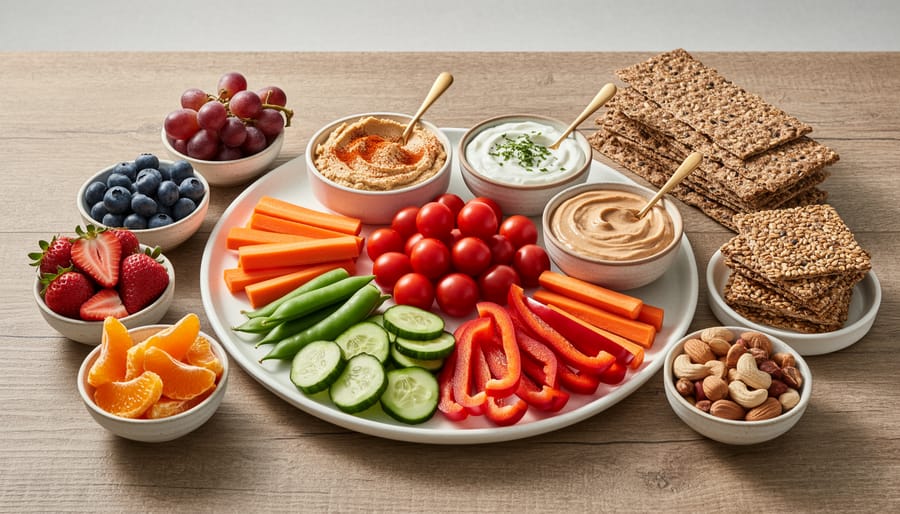
Busy mornings and packed schedules mean you need snacks that work as hard as you do. These healthy snack options require zero cooking and minimal fuss, just grab and go.
Fresh Fruits That Travel Well
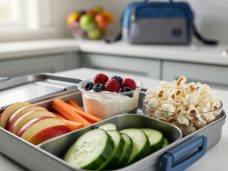
Whole fruits like apples, bananas, and oranges are nature’s original convenience food. They come pre-portioned, need no refrigeration until cut, and most kids already know how to eat them. Berries packed in small containers, grapes (halved for younger children), and clementines offer variety without adding prep time. Keep a fruit bowl on the counter at home and stock your classroom snack station with durable options that won’t bruise easily in backpacks.
Vegetables with Simple Dips
Baby carrots, snap peas, cherry tomatoes, and cucumber slices pair perfectly with single-serve hummus cups or small containers of ranch dressing. Celery sticks spread with peanut butter or almond butter (check for allergies first) combine crunch with staying power. Pre-washed, pre-cut vegetables save precious morning minutes, yes, they cost slightly more, but the time saved often justifies the expense for busy families.
Nuts, Seeds, and Dried Fruit
Individual packets of almonds, cashews, or sunflower seeds (a nut-free alternative) provide protein and healthy fats that keep hunger at bay. Mix in a small amount of dried cranberries or raisins for natural sweetness. A quarter-cup serving works well for most elementary-aged children. Store these in your pantry and toss a packet into lunchboxes without refrigeration concerns.
Dairy and Dairy Alternatives
String cheese, yogurt tubes, and single-serve yogurt cups are favorites for good reason. They deliver protein and calcium while feeling like a treat. Look for options with less than 12 grams of sugar per serving, many kid-marketed varieties contain more sugar than necessary. Shelf-stable milk boxes and individually wrapped cheese portions work when refrigeration is limited.
Whole Grain Choices
Whole grain crackers paired with cheese cubes create a satisfying combination. Look for crackers listing whole wheat or oats as the first ingredient. Popcorn (for children over four to avoid choking risk) counts as a whole grain and appeals to kids who like crunchy snacks. Air-popped or lightly salted varieties beat heavily buttered microwave versions.
Stock your pantry and fridge with these staples, and you’ll always have nutritious options ready when hunger strikes between meals.
Simple Snacks You Can Prep Ahead
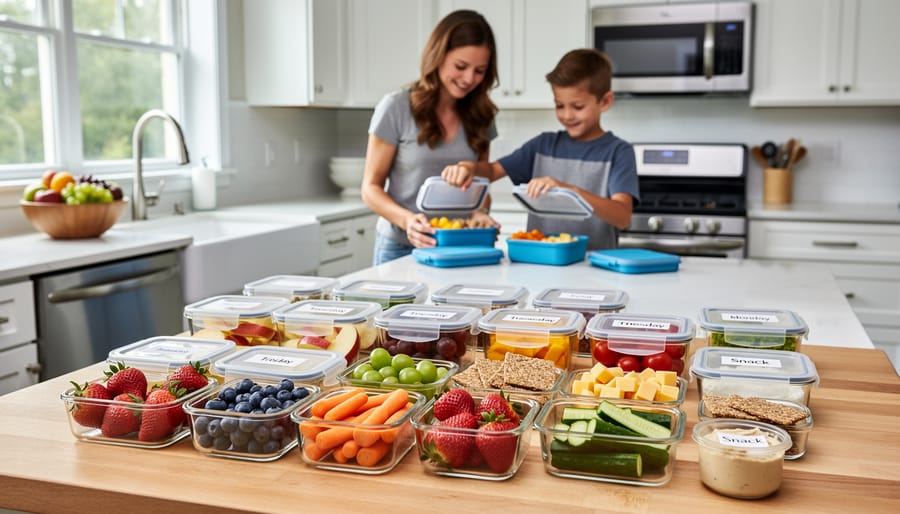
Weekend prep transforms hectic mornings into smooth sailing. Dedicating an hour on Sunday gives you a fridge full of grab-and-go options that rival anything from a store shelf, with better nutrition and lower cost.
Start with no-bake energy balls, which kids can help make. Combine rolled oats, nut or seed butter, honey, and mix-ins like mini chocolate chips or dried fruit. Roll into tablespoon-sized balls, refrigerate in an airtight container, and you have a week’s worth of protein-packed treats. Each ball delivers sustained energy without the sugar crash of packaged granola bars.
Homemade trail mix beats store versions every time. You control the ingredients and avoid excess salt and sugar. Mix raw almonds, cashews, or sunflower seeds with whole grain cereal, dried cranberries, and dark chocolate chunks. Portion into small reusable containers or bags so kids can grab exactly what they need. The combination of healthy fats, fiber, and a touch of sweetness keeps them satisfied between meals.
Veggie cups make raw vegetables irresistible. Fill small containers with carrot sticks, cucumber slices, cherry tomatoes, and bell pepper strips. Add a separate compartment with hummus, ranch dip, or guacamole. Kids love the individual portions, and having everything washed and cut removes every barrier to choosing vegetables.
DIY snack packs mimic the convenience of processed options but with whole foods. Layer Greek yogurt with berries and granola in mason jars for parfaits that last three days. Assemble cheese cubes, whole grain crackers, and apple slices in compartmented containers. Hard-boil a dozen eggs on Sunday for an instant protein source all week.
Store everything at eye level in clear containers. When children open the fridge and see colorful, ready-to-eat options front and center, they’ll choose them first.
Navigating Common Snacking Challenges
Even with the best intentions, real obstacles can derail your efforts to provide healthy snack options. Understanding these challenges and having practical workarounds makes all the difference.
Picky eaters often reject nutritious foods outright. Instead of forcing new items, pair unfamiliar snacks with trusted favorites. If your child loves crackers, serve them alongside hummus or cheese. Research shows repeated exposure without pressure increases acceptance over time, so keep offering healthy options even after initial rejection. The key is patience and persistence, not battles at snack time.
| Challenge | Solution | Alternative Options |
|---|---|---|
| Food allergies | Focus on whole foods like fruits and vegetables that naturally avoid common allergens | Sunflower seed butter instead of peanut butter; coconut yogurt for dairy-free needs |
| Budget constraints | Buy seasonal produce and purchase staples like oats and beans in bulk | Frozen fruits and vegetables offer nutrition at lower cost year-round |
| Limited school storage | Choose shelf-stable options that don’t require refrigeration | Dried fruit, roasted chickpeas, whole grain crackers, individual nut butter packets |
| Time pressure | Batch-prep snacks on weekends and portion into grab-and-go containers | Keep pre-washed produce and pre-portioned items ready in the fridge |
Food allergies require extra vigilance, but they don’t eliminate healthy snacking. Read labels carefully and communicate with teachers about safe options. Many schools now restrict nuts, making seeds, fruits, and vegetables your safest bets for shared environments.
Budget concerns are valid, yet healthy snacking doesn’t demand expensive specialty items. Apples, bananas, carrots, and oats cost less than packaged snacks while delivering better nutrition. Buying generic brands and shopping sales stretches your dollar further. When children eat healthy at school they build habits that reduce healthcare costs down the line.
Limited refrigeration at school narrows choices but doesn’t eliminate them. Insulated lunch bags with ice packs keep perishables safe for several hours. Otherwise, stick with room-temperature options that travel well and maintain their quality throughout the morning.
Age-Appropriate Portions and Timing
Getting snack portions right helps keep energy levels steady without interfering with appetite for the next meal. For preschoolers (ages 3-5), aim for about 100-150 calories per snack, think half a banana with a tablespoon of peanut butter or a small handful of whole grain crackers with cheese. Elementary-aged children (6-11) typically need 150-200 calories per snack, such as an apple with a quarter cup of nuts or a small smoothie. Tweens and teens (12+) often require 200-250 calories, especially if they’re active in sports.
Timing matters just as much as portion size. Schedule snacks midway between meals, typically mid-morning and mid-afternoon, to prevent energy crashes without spoiling appetite. A snack about two to three hours after breakfast keeps kids focused until lunch, while an afternoon snack around 3-4 PM bridges the gap to dinner. If you pack a lunch box for kids consider what time they’ll eat it and plan morning snacks accordingly.
Active children who play sports or spend considerable time outdoors may need an additional small snack post-exercise to help with recovery. Watch for hunger cues rather than forcing snacks by the clock, some days kids genuinely need more fuel than others.
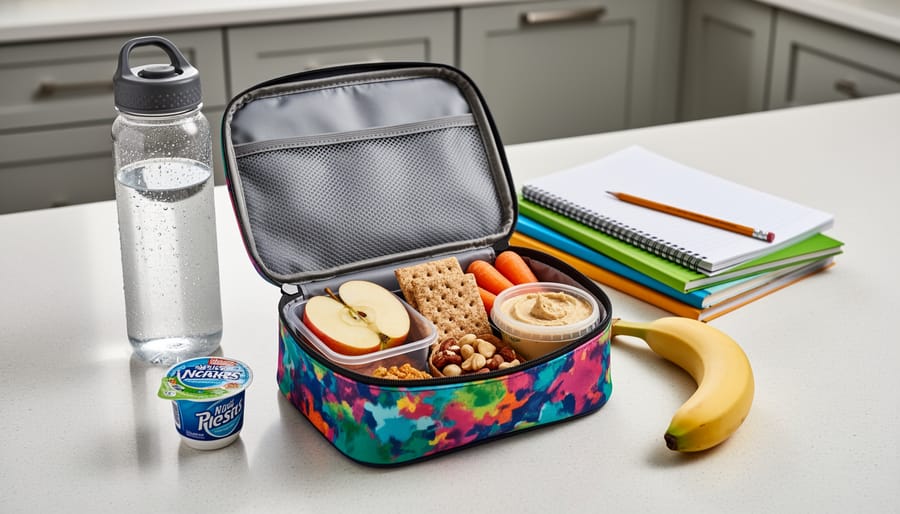
Making Healthy Snacks Appealing to Kids
Getting kids excited about healthy snacks often comes down to presentation and participation. When children feel involved in choosing and preparing their food, they’re far more likely to eat it enthusiastically.
Start by making nutritious snacks visually appealing. Simple changes create big impact:
- Cut fruits and vegetables into fun shapes using cookie cutters
- Arrange snacks into faces, rainbows, or patterns on the plate
- Use colorful containers and compartmentalized boxes that make eating feel like an adventure
- Create “rainbow snacks” by grouping foods by color
- Serve dips in small cups for interactive eating
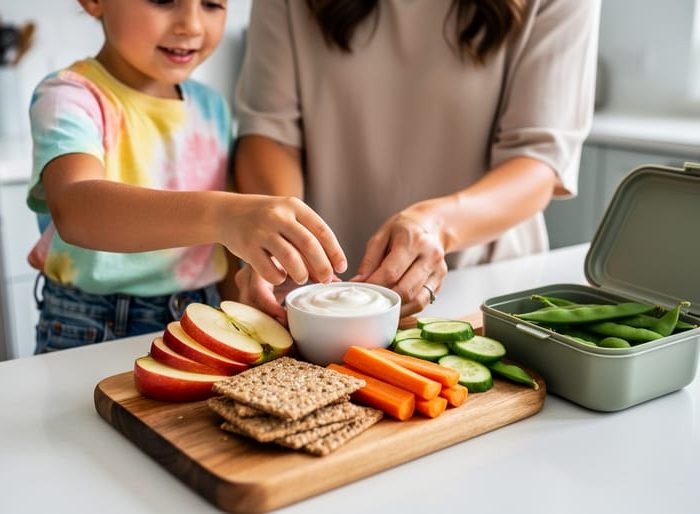
Involving children in the process transforms snack time from something imposed to something they own. Let them choose between two healthy options, help wash berries, arrange their own snack plate, or mix their trail mix combinations. Even young children can tear lettuce, count out crackers, or spread nut butter with supervision.
Introduce new foods gradually rather than replacing favorites overnight. Pair one unfamiliar item with something they already love. If your child adores cheese, serve it alongside cucumber slices. Repeat exposure matters more than immediate acceptance, research shows children often need to try a new food eight to ten times before developing a taste for it.
Rename snacks with playful descriptions that spark imagination: “superhero fuel” for energy balls, “crunchy treasure” for roasted chickpeas, or “brain power bites” for nuts and seeds. The same apple slices become infinitely more interesting when they’re “smile snacks” arranged in a grin on the plate.
Creating healthier school environments starts with simple, achievable changes, and choosing nutritious snacks is one of the most impactful steps you can take. You don’t need elaborate recipes, expensive ingredients, or hours of preparation. The healthy snack options that work best are often the simplest: fresh fruit paired with nut butter, vegetables with hummus, whole grain crackers with cheese, or a handful of trail mix.
Start where you are. If your child currently snacks on processed foods throughout the day, swapping just one snack for a healthier option creates momentum. Pack baby carrots instead of chips on Monday. Try apple slices with almond butter on Wednesday. Small, consistent changes build habits that last far longer than dramatic overhauls that feel overwhelming.
Remember that you’re not aiming for perfection, you’re building a foundation that supports your child’s energy, concentration, and long-term health. Every nutritious snack you offer helps stabilize their blood sugar, fuels their learning, and teaches them that healthy eating can be satisfying and enjoyable.
Whether you’re a parent packing lunchboxes or a teacher organizing classroom snacks, you have the power to shape children’s relationship with food during their most formative years. The strategies you’ve learned here, balancing nutrients, prepping ahead, addressing challenges creatively, equip you to make choices that genuinely support kids’ wellbeing. Your efforts matter more than you might realize, and every healthy snack option you provide is an investment in their future.